
Diode Laser Hair Removal
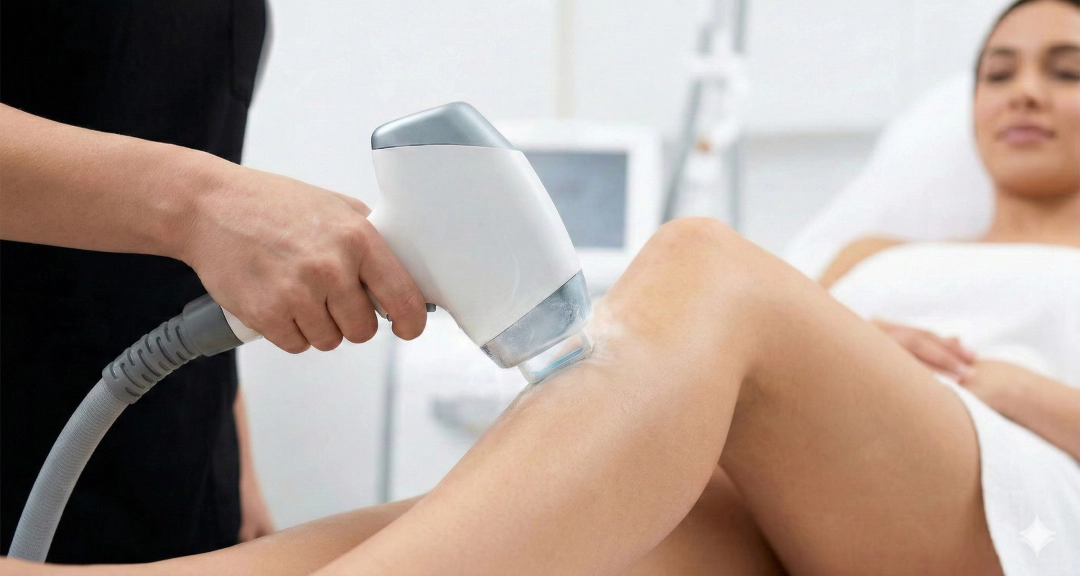
808nm/810nm Diode Laser Hair Removal: Science, Benefits, and Clinical ROI
For aesthetic clinics and medspas, offering reliable, efficient, and comfortable hair removal is no longer just an option—it is a foundational service. While IPL (Intense Pulsed Light) has its place, the undisputed “gold standard” in the professional aesthetic industry is Diode Laser Hair Removal.
Renowned for its precision, speed, and safety profile across a wide range of skin types, diode laser technology represents a smart investment for any serious aesthetic practice. But what makes it so effective? This comprehensive guide breaks down the science, the distinct advantages, and why diode lasers dominate the professional market.
1. The Science: How Does a Diode Laser Work?
Like IPL, diode lasers operate on the principle of Selective Photothermolysis. However, the execution is vastly different. A diode laser uses semiconductors to produce a highly concentrated, coherent beam of single-wavelength light.
The Power of the 808nm/810nm Wavelength
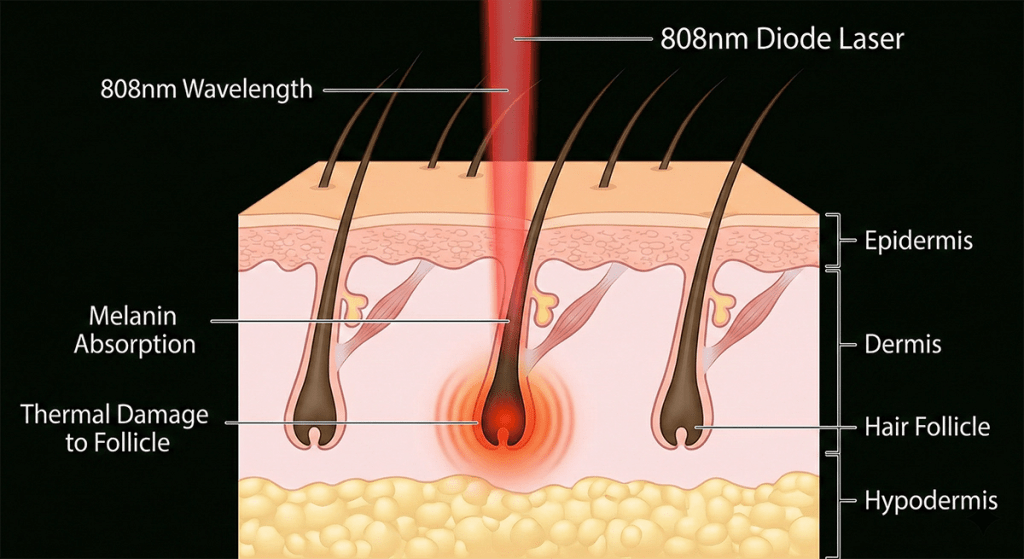
Most professional diode lasers operate at a specific wavelength—typically 808nm or 810nm (though modern machines often combine 755nm, 808nm, and 1064nm). This specific wavelength is the “sweet spot” for hair removal because it offers:
- Deep Penetration: The 808nm wavelength penetrates deeply into the dermis, reaching the root and the bulge of the hair follicle where the stem cells reside.
- High Melanin Absorption: It is highly absorbed by the melanin (the dark pigment) in the hair shaft, but has a lower absorption rate by the melanin in the surrounding skin’s epidermis compared to shorter wavelengths (like Alexandrite).
The Thermal Destruction Process
When the laser pulses, the light energy travels down the hair shaft. The melanin absorbs this intense energy, converting it into heat. This localized thermal damage destroys the follicle’s ability to regenerate, leading to permanent hair reduction, all while the surrounding skin remains largely unaffected.
2. Diode Laser vs. IPL: Why Clinics Prefer the Laser
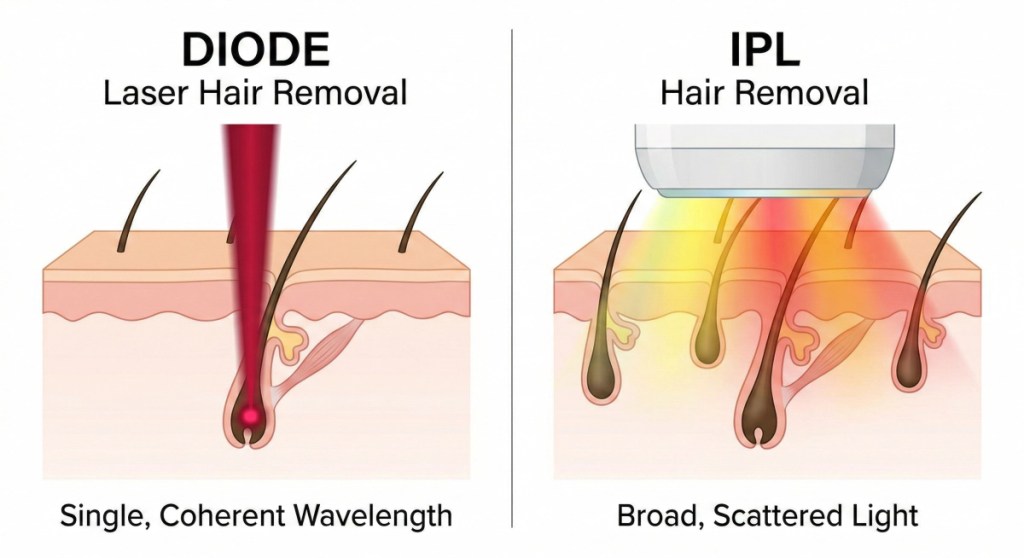
While both methods reduce hair growth, comparing them is like comparing a sniper rifle to a shotgun.
- Precision (Coherent vs. Broad Light): IPL uses a broad spectrum of scattered light, which limits penetration depth and wastes energy on non-target tissues. A Diode laser emits a single, highly focused, parallel beam of light that drives energy directly into the follicle.
- Safety on Darker Skin: Because IPL light is scattered, it heavily affects the epidermis, making it risky for darker skin tones (Fitzpatrick IV-VI). Diode lasers (especially at 808nm or 1064nm) bypass the epidermis more effectively, making them significantly safer and more effective for a wider variety of skin types.
3. The Pros and Cons of Diode Laser Technology
For clinic owners and practitioners, evaluating the strengths and limitations of diode systems is crucial for business planning.
The Advantages (Pros):
- Versatility Across Skin Types: Diode lasers are FDA-cleared and clinically proven to be safe and effective for skin types I through VI on the Fitzpatrick scale.
- Fast Treatment Times: Modern diode lasers feature large spot sizes and “In-Motion” (SHR) technology. By delivering low energy at a high repetition rate (up to 10Hz), practitioners can glide the handpiece over the skin, drastically reducing treatment time for large areas like backs and legs.
- Superior Patient Comfort: Premium diode machines are equipped with advanced contact cooling systems (such as sapphire crystal cooling) integrated directly into the handpiece. This chills the epidermis before, during, and after the pulse, making the treatment virtually painless.
- High Efficacy: Diode lasers boast some of the highest rates of permanent hair reduction in the industry, requiring fewer overall sessions than IPL.

The Limitations (Cons):
- Higher Initial Investment: Professional diode laser machines represent a significant capital expenditure compared to basic IPL devices.
- Professional Operation Required: Operating a Class IV medical laser requires certified, highly trained technicians to ensure safety and optimal clinical outcomes.
4. Why Diode Lasers Drive Clinic ROI
From a business perspective, upgrading to a diode laser is highly lucrative. The fast treatment times mean higher patient turnover (more treatments per day). The virtually painless experience and superior clinical results lead to higher patient satisfaction, glowing reviews, and strong word-of-mouth referrals. In the competitive aesthetic market, offering top-tier diode laser hair removal is a powerful way to retain clients and maximize Return on Investment (ROI).
5. Elevate Your Practice with Professional Solutions
To deliver the flawless results your clients expect, the quality of your laser equipment is paramount. You need technology that balances high-powered energy output with advanced cooling and unwavering reliability.
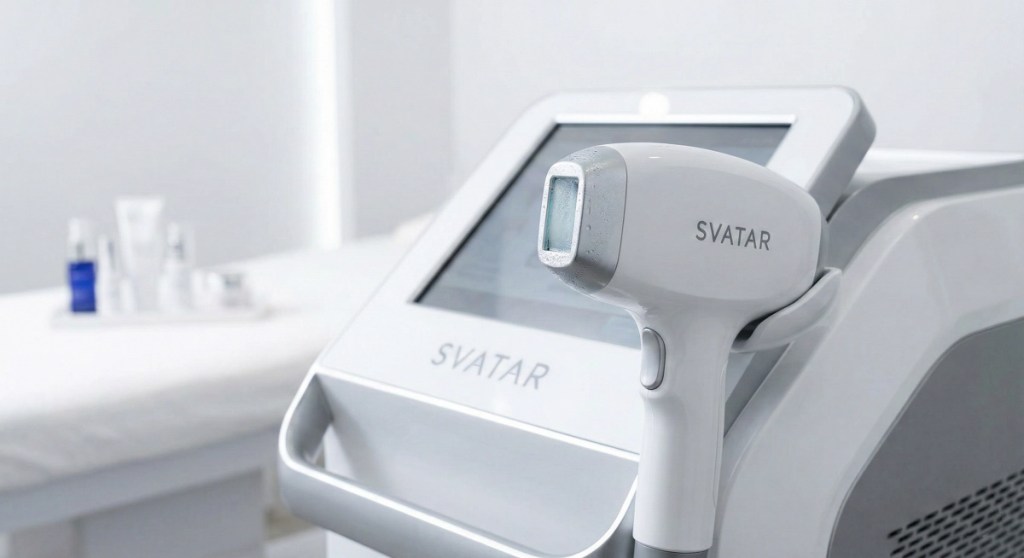
Are you ready to equip your clinic with the industry’s most advanced laser technology? Discover the next generation of professional aesthetic equipment at SVATAR. Visit our official website to explore our premium Diode Laser systems, engineered to enhance your treatment capabilities, ensure patient safety, and drive your aesthetic business forward.