
IPL Hair Removal
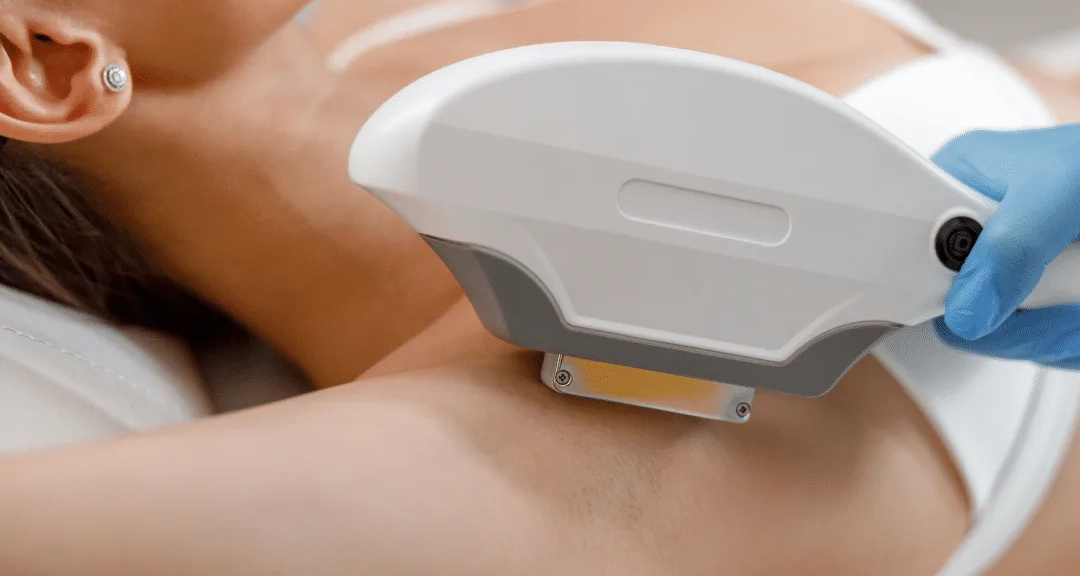
IPL Hair Removal: Science, Pros, and Cons
For decades, achieving smooth, hair-free skin has involved a seemingly endless cycle of shaving, waxing, plucking, and depilatory creams. These methods are often time-consuming, painful, and provide only temporary relief. Enter Intense Pulsed Light (IPL) hair removal, a modern technology offering a significant leap toward a long-term solution for permanent hair reduction.
But how exactly does this “magic light” work? Is it the same as laser? What are the honest advantages and disadvantages? This comprehensive guide will break down the science of IPL hair removal, compare it to other technologies, and help you decide if it’s the right investment for your skin.
1. The Science: How Does IPL Work?
IPL is a non-invasive, light-based technology. Unlike methods that cut or pull hair from the surface, IPL targets the hair at its source: the follicle, deep within the dermis.
Selective Photothermolysis: The Target is Melanin
The core scientific principle of IPL is Selective Photothermolysis. This process uses specific wavelengths of light to target a structure—in this case, the melanin pigment in the hair shaft—without damaging the surrounding skin tissue.
The Conversion Process
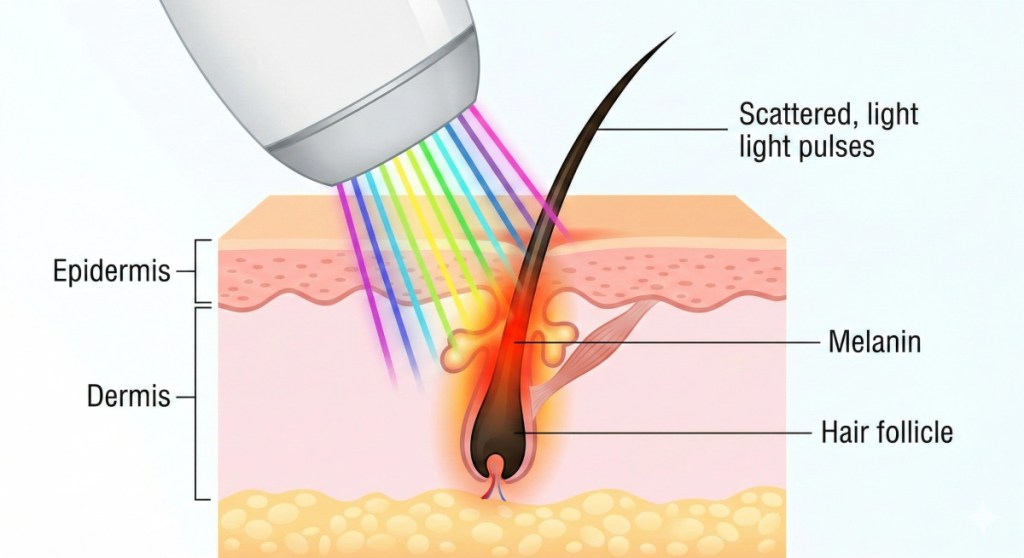
When an IPL device is pulsed, it emits a broad spectrum of light energy. Melanin, the pigment that gives hair its color, is an excellent absorber of this light.
1. Absorption: As the light penetrates the skin, it is absorbed selectively by the high concentration of melanin in dark hair. (See image below for visualization).
2. Conversion: This absorbed light energy is immediately converted into localized heat.
3. Damage: The resulting intense heat travels down the hair shaft to the follicle bulb (the growth center). This heat damages or destroys the key cells responsible for hair regeneration.
2. IPL vs. Laser Hair Removal: What’s the Difference?
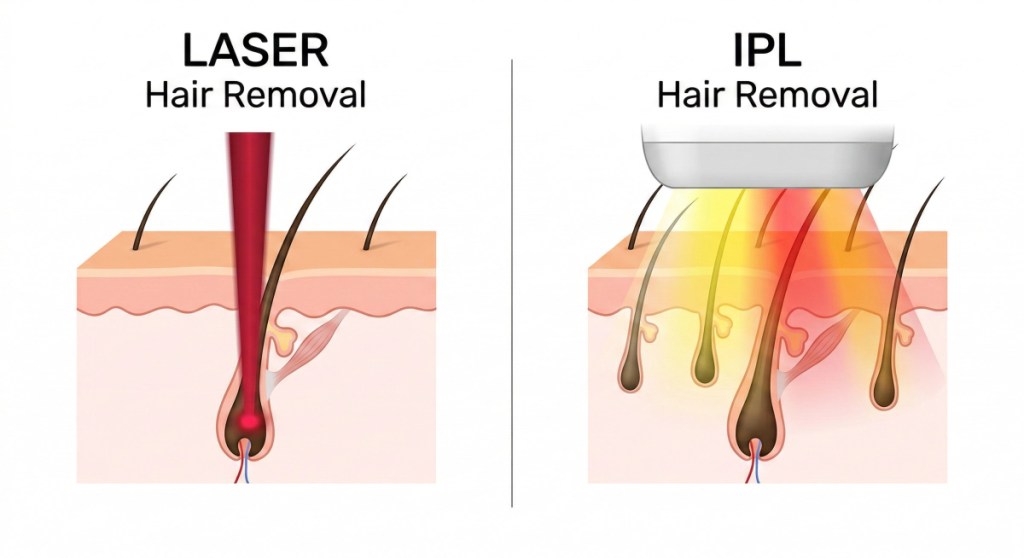
While both technologies utilize light energy to damage hair follicles, they are fundamentally distinct in their light delivery, precision, and application. (See comparison below for visual details).
Laser Hair Removal: The Precise Laser Beam
Laser hair removal uses a single, coherent, monochromatic wavelength of light (like a laser pointer). This beam is extremely focused, highly energized, and targets melanin with exceptional precision. It’s ideal for quickly treating specific areas or more complex scenarios.
IPL Hair Removal: The Broad Flash Bulb
IPL is like a high-energy camera flash. It emits a broad spectrum of non-coherent, non-monochromatic light. This means the light energy is scattered across different wavelengths and covers a wider surface area per pulse. It’s often more affordable and versatile (e.g., used for at-home IPL or treating other skin concerns), but generally requires more sessions than laser.
3. The Pros and Cons of IPL
When considering IPL, it’s vital to weigh its specific benefits and limitations against your personal goals and skin type.
The Benefits of IPL Hair Removal (Pros):
1. Cost-Effective (Long-Term): IPL can be significantly cheaper than laser over time, especially with the rise of reliable at-home IPL devices. There are no ongoing costs for razors or waxing.
2. Larger Treatment Area: Since IPL has a wider light spread, it can cover large areas like legs, back, and arms relatively quickly per session.
3. Photo-rejuvenation (Bonus): The same broad-spectrum light can be adjusted to treat other skin concerns, such as pigmentation, redness, and fine lines, often called “photo-rejuvenation.”
4. Relatively Painless: Most users describe the sensation as a light snap of a rubber band. It’s generally considered less painful than waxing or most laser treatments.
The Limitations of IPL Hair Removal (Cons):
1. Less Effective on Light Hair/Dark Skin: Due to the broad spectrum, IPL struggles with very blonde, gray, or red hair (low melanin). It can be risky on very dark skin tones, where skin melanin competes with hair melanin.
2. Many Sessions Required: Because IPL is less precise than laser and hair grows in cycles (Anagen, Catagen, Telogen), multiple sessions (often 6-12) are needed to ensure all follicles are treated during their active growth phase.
3. Not Permanent: Maintenance Needed: Like laser, IPL is officially termed “permanent hair reduction.” It does not guarantee you will be hair-free forever. Maintenance treatments are usually required every 6-12 months.
4. Risk of Skin Sensitivity: Over-treating or using the wrong settings can lead to temporary side effects like redness, swelling, or even burns in rare cases.
4. Is IPL Right for You? Skin Tone and Hair Color Suitability Chart
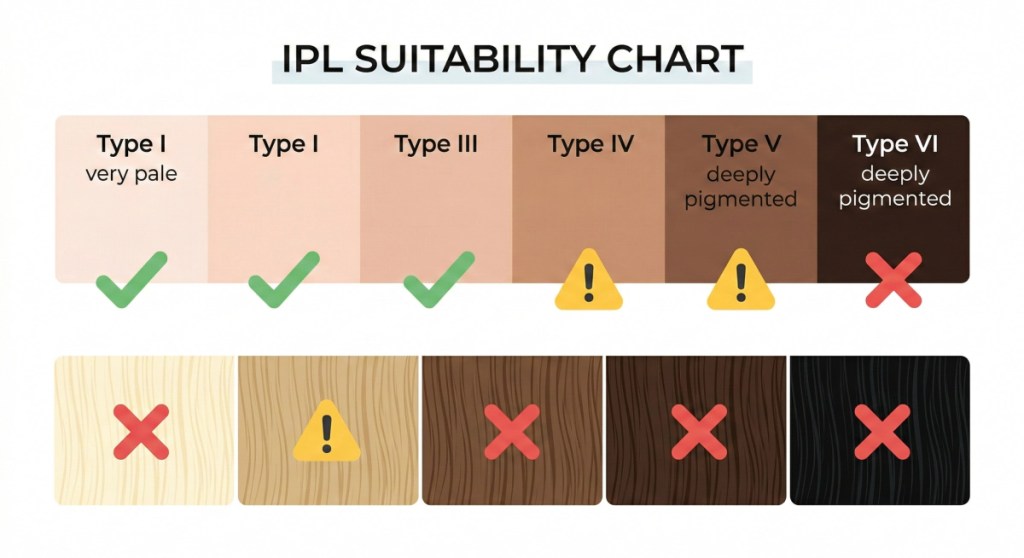
IPL is not universally suitable. Its effectiveness and safety directly depend on your skin tone and hair color. (See the infographic below for a visual guide).
The Best Candidate: Contrast is Key
The ideal candidate has light skin (Type I-III) and dark hair (black or brown). This combination ensures maximum contrast: the light energy is almost entirely absorbed by the melanin in the hair follicle, not the surrounding skin.
Safety Concerns: Dark Skin Tones
For individuals with very dark skin (Type V-VI), there is too much melanin in the skin. The broad spectrum of IPL is absorbed by the skin’s surface, which can lead to burns, blistering, or hyperpigmentation. Specialized lasers or alternative methods (like electrolysis) are safer for these individuals.
Ineffectiveness: Light Hair Colors
If your hair is very blonde, gray, or red, it doesn’t contain enough melanin to absorb sufficient IPL energy, making the treatment ineffective.
5. At-Home IPL vs. Professional Treatments: Why Clinics Choose the Latter
While at-home IPL devices have gained popularity for personal use, they operate at a fraction of the power of professional machines to ensure consumer safety. For aesthetic clinics, medspas, and salons, professional-grade IPL equipment is the only standard.
At-Home IPL Devices:
Pros: Convenient for personal, low-intensity maintenance.
Cons: Low energy output, requires significantly more sessions, results are often inconsistent, and lacks the advanced cooling systems needed for skin protection.
Professional IPL Equipment (The Industry Standard):
Pros: Delivers high, consistent energy for faster and superior results. Features advanced contact cooling to maximize client comfort and epidermal protection. Customizable pulse widths and filters allow practitioners to safely treat a wider variety of skin and hair types.
Cons: Requires a higher initial investment for the clinic, but yields a high Return on Investment (ROI) through effective, high-ticket client treatments.
6. Conclusion & Elevate Your Clinic’s Offerings
IPL hair removal is a scientifically proven, highly sought-after treatment for long-term hair reduction. By utilizing Broad-Spectrum Light, it effectively targets hair follicles while offering the versatility to treat other skin concerns like pigmentation and vascular lesions.
For aesthetic professionals, the key to delivering exceptional client satisfaction lies in the quality of the equipment. Investing in reliable, high-performance IPL machines ensures you can provide safe, efficient, and profitable treatments.
Ready to upgrade your clinic’s aesthetic capabilities? Explore the industry-leading professional aesthetic equipment at SVATAR. Visit our official website to discover advanced, reliable IPL and light-based solutions designed to elevate your business and deliver the results your clients demand.